What Is WHOIS?
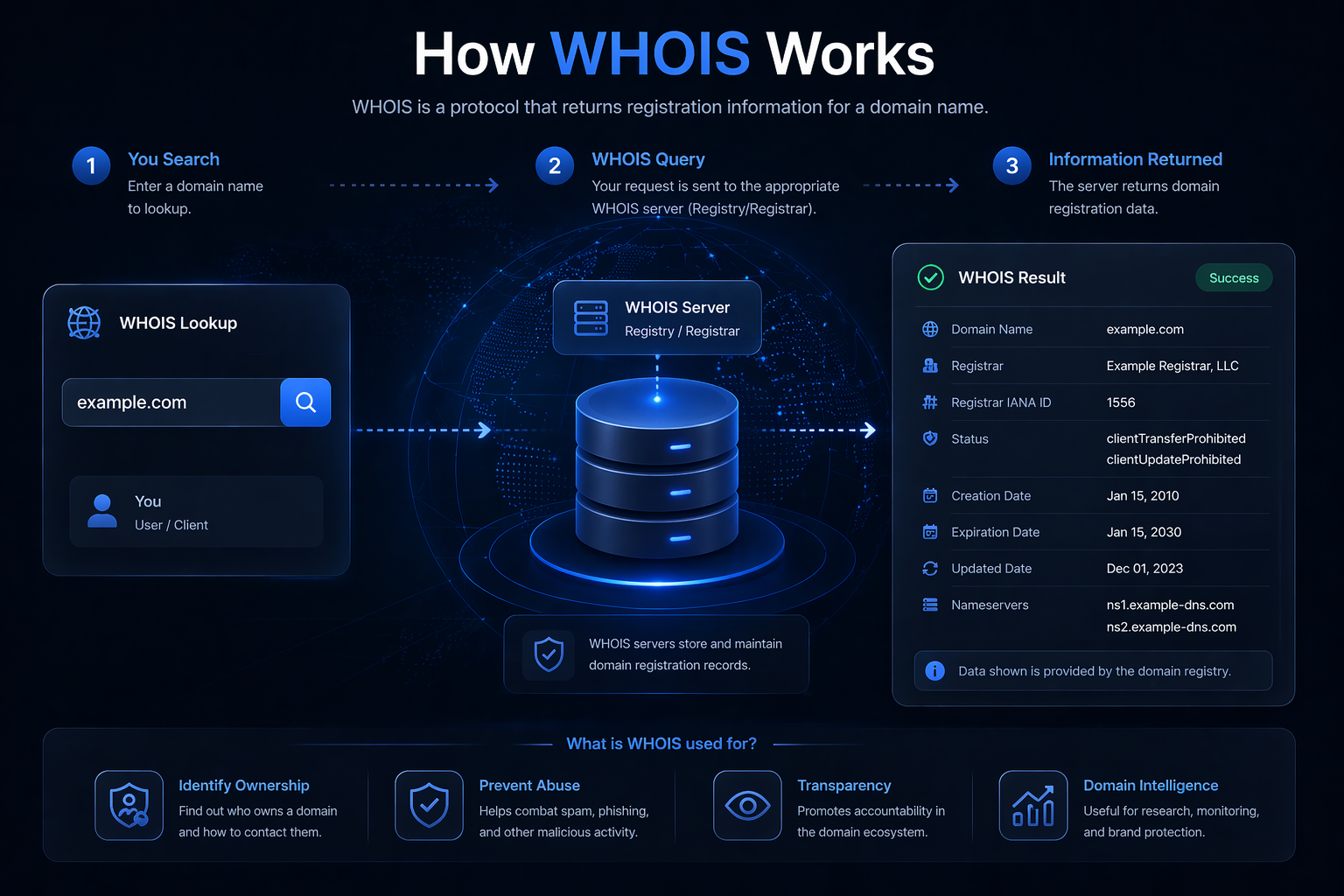
WHOIS is a system used to retrieve public information about a domain name. It helps you understand who registered a domain, which registrar manages it, when it was created, when it expires, and what nameservers it uses.
In simple terms, WHOIS is one of the easiest ways to inspect the registration side of a domain name.
🔎 Try a WHOIS Lookup
Check domain ownership, registrar details, and registration dates instantly:
Run WHOIS Lookup →What Does WHOIS Show?
A WHOIS lookup can reveal several useful pieces of information, including:
- Domain registrar
- Creation date
- Expiration date
- Last update date
- Domain status
- Nameservers
- Registrant details, if publicly available
This makes WHOIS valuable for developers, security teams, researchers, and anyone managing or investigating domains.
How Does WHOIS Work?
When you perform a WHOIS lookup, a query is sent to domain registration databases. The system then returns the public registration record associated with that domain.
Depending on the TLD and registrar, the response may include full details or only partial information. In many cases, some personal fields are hidden for privacy reasons.
Even with those limitations, WHOIS still provides useful metadata such as registrar name, registration timeline, nameservers, and domain status.
Why WHOIS Matters
WHOIS remains one of the most practical tools for domain research. It helps answer questions such as:
- Who registered this domain?
- When was this domain created?
- When does this domain expire?
- Which registrar manages it?
- Is this domain newly registered or potentially suspicious?
For cybersecurity investigations, WHOIS is often the first step when analyzing phishing websites, scam domains, or suspicious online services.
Who Uses WHOIS?
WHOIS is useful in many contexts:
- Developers checking domain setup and registrar details
- Security teams investigating suspicious domains
- Businesses monitoring domain ownership and expiration
- Domain buyers researching registration history
- Journalists and researchers looking into online entities
What Is the Difference Between WHOIS and DNS?
WHOIS is about domain registration and ownership-related data. DNS is about technical records and routing.
If you want to know who registered a domain and when, use WHOIS. If you want to know which IP address a domain points to, that is a DNS-related question.
To learn more, read our guide: WHOIS vs DNS Lookup: What’s the Difference?
Why Some WHOIS Data Is Hidden
In the past, WHOIS records often displayed detailed contact information. Today, many registrars redact personal data because of privacy regulations such as GDPR, as well as domain privacy protection services.
This means you may not always see the direct owner name or email address. However, WHOIS records still often provide enough information to understand when a domain was registered, which registrar manages it, and whether the domain looks suspicious.
Common WHOIS Use Cases
1. Investigating Suspicious Domains
A recently registered domain with hidden ownership and unusual nameservers may deserve additional scrutiny. WHOIS can help identify those patterns quickly.
2. Checking Domain Expiration
If you manage digital assets or monitor competitor domains, WHOIS helps you see expiration dates and domain lifecycle information.
3. Verifying Ownership
WHOIS is a common first step when trying to find out who controls a domain or which registrar is responsible for it.
4. Researching Domain History
Registration dates and update history can provide useful context during due diligence, security investigations, or domain purchases.
WHOIS and ICANN
ICANN plays a central role in the domain name ecosystem. While WHOIS data is provided through registrars and registry systems, ICANN oversees the broader coordination and policy framework around domain registration.
If you want a more specific guide, read: ICANN Lookup: How to Perform a WHOIS Search
How to Use WHOIS Effectively
A good WHOIS workflow is simple:
- Enter the domain name you want to inspect
- Review registrar and date information
- Check whether ownership is public or hidden
- Look at nameservers and domain status
- Use those signals as part of a broader investigation
If you want to identify the owner of a domain specifically, you can also read: How to Find the Owner of a Domain
FAQ
What does WHOIS mean?
WHOIS refers to the system used to query public domain registration records. It is commonly used to inspect domain ownership, registrar information, and registration dates.
Is WHOIS free?
Yes, WHOIS lookups are generally free and widely available through online tools.
Can WHOIS show the real owner of a domain?
Sometimes. If privacy protection is enabled or data is redacted, personal ownership details may be hidden.
Why would I use WHOIS?
You would use WHOIS to investigate a domain, check its registrar, see when it was created or expires, or analyze whether it looks trustworthy.
Start with a WHOIS Lookup
WHOIS remains one of the simplest and most useful tools for understanding domains. Whether you are researching ownership, checking expiration, or investigating suspicious websites, it provides fast and valuable context.