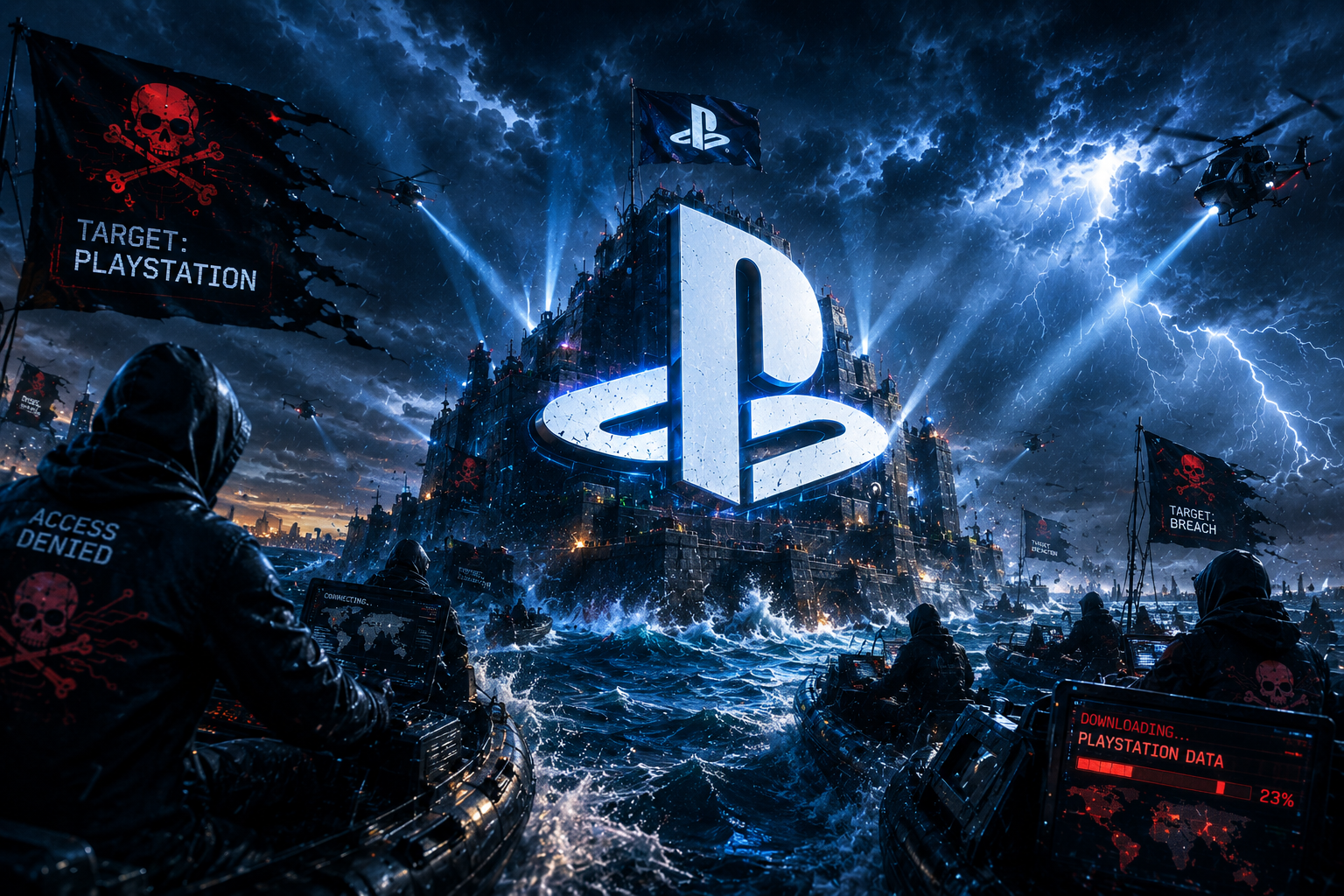
The video game industry is standing at a critical crossroads. For decades, physical media (discs, cartridges, and physical collector's editions) formed the foundation of video game distribution. Physical discs allowed players to truly own their games, trade them with friends, resell them on second-hand markets, or play them decades later without an internet connection.
Today, Sony is accelerating its push toward a completely all-digital PlayStation ecosystem. From disc-less PS5 consoles and optional external disc drives to persistent rumors of future digital-only hardware, Sony's corporate vision is clear: eliminate physical manufacturing, eliminate retailers, and force every player into the PlayStation Store.
However, history teaches us a fundamental lesson that corporate strategists often overlook: when legal access becomes restrictive, expensive, and unowned, consumers do not simply accept defeat, they turn to alternative channels. Far from securing endless digital profits, Sony's war on physical media is laying the exact groundwork for a massive resurgence in video game piracy and emulation.
The Pre-Streaming Lesson: What Music and Movies Taught Us
To understand why Sony's digital monopoly strategy is doomed to backfire, we must look back at the media landscape of the late 1990s and early 2000s.
Before services like Spotify or Netflix existed, music and movie piracy reached epidemic proportions worldwide. Peer-to-peer networks like Napster, LimeWire, BitTorrent, and MegaUpload dominated global web traffic. Industry executives initially blamed "immoral consumers" and launched aggressive legal campaigns. But the real root cause was far simpler: legitimate access was broken, overpriced, regionalized, and inconvenient.
“Piracy is almost always a service problem, not a pricing problem. If a pirate offers a product anywhere in the world, 24/7, downloadable from the comfort of your computer, and the official provider says the product is region-locked... then the pirate's service is superior.”
Gabe Newell, Co-Founder of Valve
When Spotify made millions of songs instantly accessible for a fair monthly subscription, and when Netflix made movie streaming seamless, piracy plunged. Consumers were eager to pay for convenience, ownership confidence, and fair access.
By killing physical media and pricing digital console games at $70 to $80 with zero resale value and strict regional locks, Sony is actively reversing the lessons of the streaming revolution. By recreating an inconvenient, overpriced, and walled-garden ecosystem, Sony is reigniting the exact consumer frustration that fuelled mass piracy twenty years ago.
From "For the Players" to Corporate Walled Garden
During the launch of the PlayStation 4 in 2013, Sony famously mocked Microsoft's initial always-online, anti-used-game Xbox One policies. Sony released a legendary 22-second video titled "Official PlayStation Used Game Instruction Video", where Sony executives simply handed a game disc to one another. Sony built an incredibly strong, beloved brand image among gamers as the champion of physical media and true consumer ownership under the banner "For the Players."
A decade later, that goodwill has largely evaporated.
Sony's recent moves paint a vastly different picture:
- Disc-less console push: Shipping standard PS5 models without disc drives and charging high add-on prices for detachable drives.
- Storefront pricing monopoly: Without physical retail competition from Amazon, GameStop, or local shops, games on the PlayStation Store remain locked at full price ($79.99) for years after launch.
- Revocable licenses: As highlighted when Sony removed purchased Discovery TV content or shut down digital stores for legacy consoles like PS3 and PS Vita, digital purchases can disappear without warning.
- Geographic exclusion: Enforcing strict PlayStation Network (PSN) requirements that exclude players in over 120 countries where PSN is not officially supported.
When a company converts consumer trust into a closed, high-priced digital trap, player loyalty turns into consumer cynicism. Gamers no longer feel morally obligated to support an ecosystem that treats them as captive subscribers rather than owners.
PS5 Emulation Breakthroughs: The Technological Counterweight
Executives pushing for an all-digital future often operate under a dangerous delusion: they believe that by removing disc drives and encrypting digital downloads, they can maintain total control over game distribution indefinitely.
History proves that hardware encryption is never permanent. In recent months, the PlayStation emulation and modding scene has made extraordinary, unprecedented progress:
- PS4 Emulation Maturity: Emulators like shadPS4 can now run major triple-A titles such as Bloodborne, Red Dead Redemption, and The Last of Us Remastered at high framerates on modern PCs.
- PS5 Architecture & Jailbreaks: Because the PlayStation 5 is built on standard x86-64 AMD architecture and FreeBSD software foundations, security researchers and developers are cracking PS5 firmware faster than previous console generations.
- Community Preservation Initiatives: As Sony delists titles and closes digital storefronts, reverse-engineering groups and preservationists are archiving game files, updates, and DLC to prevent cultural erasure.
As PS5 emulation matures over the coming years, downloading and running PlayStation titles on open hardware will become accessible to mainstream users. When legal digital copies cost $80 and offer zero ownership rights, while emulated versions offer higher resolutions, unlocked framerates, mod support, and offline preservation, the incentive to pirate becomes overwhelming.
Sony's projected long-term digital monopoly profits are far less guaranteed than their financial reports suggest. An all-digital console environment creates the ultimate breeding ground for emulation adoption.
📁 Preserving & Securing Your Personal Data
Whether archiving personal game media, digital backups, or sensitive personal records, securing your digital files against loss or intrusion is vital in an era of ephemeral cloud services.
How to Protect Your Digital Files →The Great Migration: Why Gamers Are Moving to PC
The ultimate casualty of Sony's closed console strategy may not just be physical discs, it may be console hardware itself. Faced with locked digital storefronts and rising subscription fees for online multiplayer, millions of console gamers are asking a fundamental question: Why stay on a closed console when PC offers actual freedom?
Unlike PlayStation, where Sony holds a 100% storefront monopoly and sets arbitrary pricing, the PC ecosystem thrives on genuine market competition:
| Feature / Criteria | PlayStation Digital Ecosystem | Open PC Gaming Ecosystem |
|---|---|---|
| Storefront Competition | Single monopoly (PS Store) | Steam, Epic Games, GOG, Humble, Fanatical, GreenManGaming |
| DRM-Free Options | None (Always tied to PSN) | GOG provides offline, DRM-free installers you keep forever |
| Paid Online Multiplayer | Requires mandatory PS Plus subscription ($80–$160/yr) | 100% Free online multiplayer |
| Backwards Compatibility | Limited; dependent on cloud streams or re-releases | Decades of titles playable natively or via community patches |
| Hardware Freedom | Fixed console specs, proprietary add-ons | Upgradeable GPUs, Handhelds (Steam Deck), ultrawide displays |
On PC, if a store charges too much, gamers can buy from another authorized store or choose DRM-free platforms like GOG that guarantee offline ownership. Furthermore, Sony itself now ports its major first-party PlayStation exclusives to PC (including God of War, Spider-Man, Horizon, and Ghost of Tsushima), removing the primary reason to buy PlayStation hardware in the first place.
Summary: The Price of Eliminating Ownership
Sony's belief that an all-digital future will deliver endless high-margin revenue is short-sighted. By stripping players of physical ownership, forcing uncompetitive storefront pricing, and shutting down regional access, Sony is dismantling the very foundation of its brand loyalty.
If history has taught us anything, it is that gamers will always choose freedom and fair access over digital captivity. If Sony refuses to provide it, the emulation scene, PC storefronts, and digital preservationists will.
FAQ
Why does killing physical games increase video game piracy?
Physical games provide true ownership, second-hand affordability, and offline access. When physical copies disappear and digital storefronts charge non-competitive prices without resale options or ownership guarantees, consumers frequently turn to piracy and emulation as alternatives.
Is PS5 emulation already possible?
PS4 emulation is already running commercial triple-A titles on PC, and PS5 emulation/jailbreaking research is advancing rapidly due to the PS5's standard x86-64 AMD hardware architecture.
Why are console gamers switching to PC?
PC gaming offers storefront competition (Steam, Epic, GOG), free online multiplayer, DRM-free offline game installers, superior performance customization, and full backwards compatibility, unlike closed console walled gardens.
What is the difference between buying a physical game disc and a digital download?
A physical disc gives you a tangible asset that can be played offline, lent to friends, or resold. A digital download on platforms like PlayStation is a revocable software license that depends on server authentication and can be modified or removed by the publisher.