Why Server Security Matters
Every server exposed to the internet becomes a potential target. Automated bots continuously scan IP ranges, probe open ports, and attempt to exploit misconfigurations.
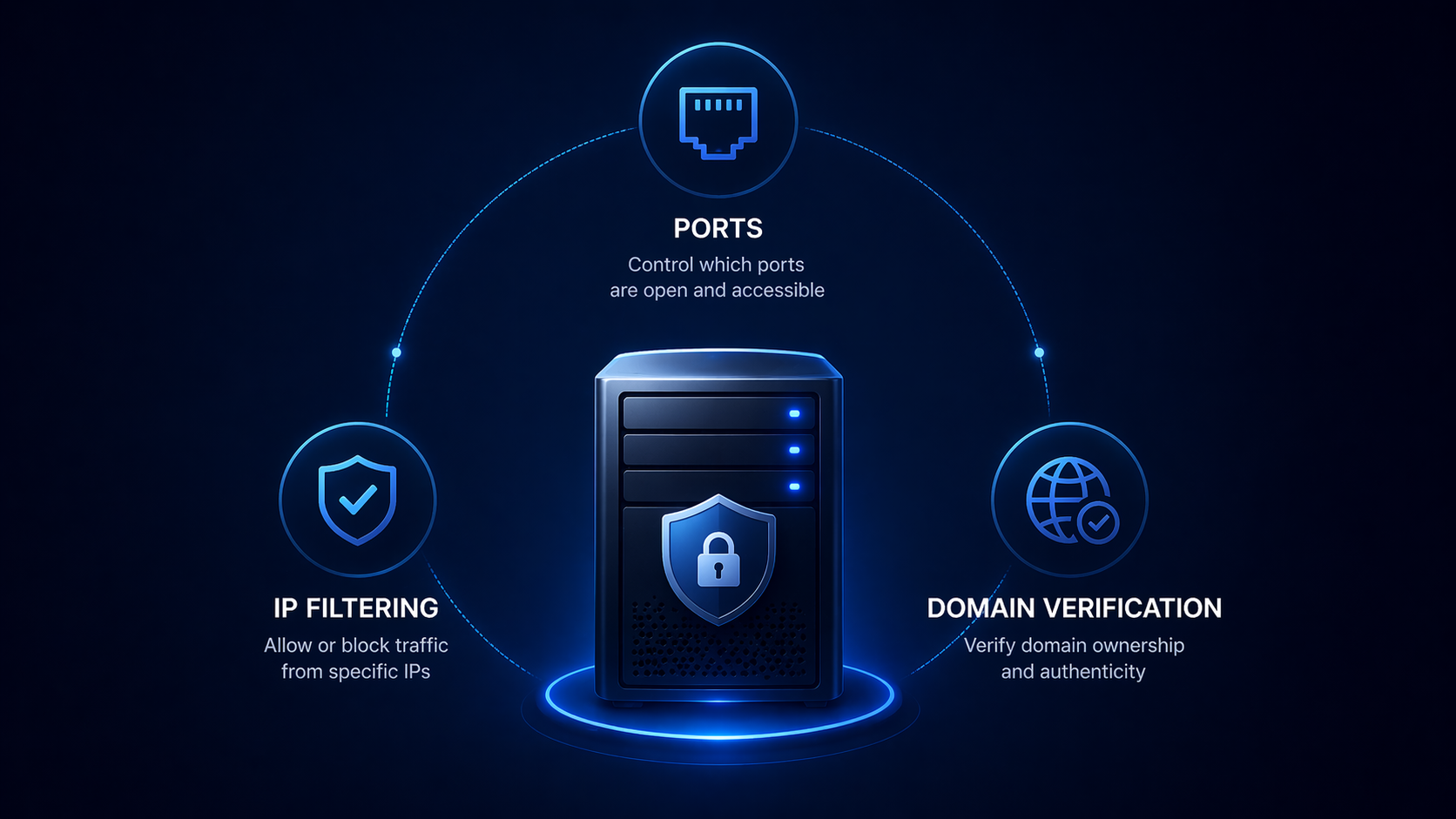
Securing a server is not just about one layer. It requires a combination of:
- Port management
- IP intelligence
- Domain awareness
The goal is simple: reduce your attack surface and filter suspicious traffic before it becomes a problem.
1. Secure Your Open Ports
Open ports are necessary for services, but they are also entry points. Every unnecessary open port increases risk.
- Close unused ports
- Restrict access via firewall rules
- Avoid exposing admin services directly
Regularly scanning your ports helps you detect unintended exposure.
2. Monitor IP Traffic and Detect Risk
Not all traffic is equal. Some requests come from legitimate users, while others originate from datacenters, proxies, VPNs, or automated scripts.
By analyzing IP data, you can:
- Detect VPN or proxy usage
- Identify datacenter traffic
- Assign risk scores
- Block suspicious behavior
🛡️ Add IP Intelligence to Your Security
Use the myip.casa API to enrich traffic with security signals:
- VPN detection
- Proxy detection
- Datacenter classification
- Risk scoring
This allows you to move from basic protection to intelligent filtering.
3. Verify Domain and Traffic Sources
Understanding domain ownership and registration data adds another layer of security.
WHOIS data helps you:
- Investigate suspicious domains
- Check domain age
- Identify unusual registration patterns
Combining domain intelligence with IP analysis provides stronger signals than using either alone.
4. Limit Exposure to Critical Services
Never expose sensitive services directly to the internet without protection.
- Use VPN or SSH tunnels for admin access
- Restrict access by IP when possible
- Enable authentication and rate limiting
5. Automate Security Checks
Manual checks are not enough. Modern infrastructure requires automation.
You can integrate IP intelligence directly into your backend to:
- Block risky IPs in real time
- Apply dynamic access rules
- Log and analyze suspicious traffic
This is where APIs become essential.
6. Combine All Layers
The most effective security strategy combines multiple signals:
- Port exposure (network layer)
- IP reputation (traffic layer)
- Domain intelligence (context layer)
No single layer is enough. Together, they provide a strong defense.
FAQ
What is the biggest server security risk?
Unnecessary open ports and unfiltered traffic are among the most common risks.
Can I secure my server without an API?
Yes, but you will miss advanced signals like IP classification and risk scoring.
How often should I scan my ports?
Regularly, especially after configuration changes.
Secure Your Server Today
Start by checking your ports, analyzing your traffic, and adding intelligent filtering to your stack.